

THE PRINCESS BRIDE is a miracle movie.
It takes hard work to make something so delightful.

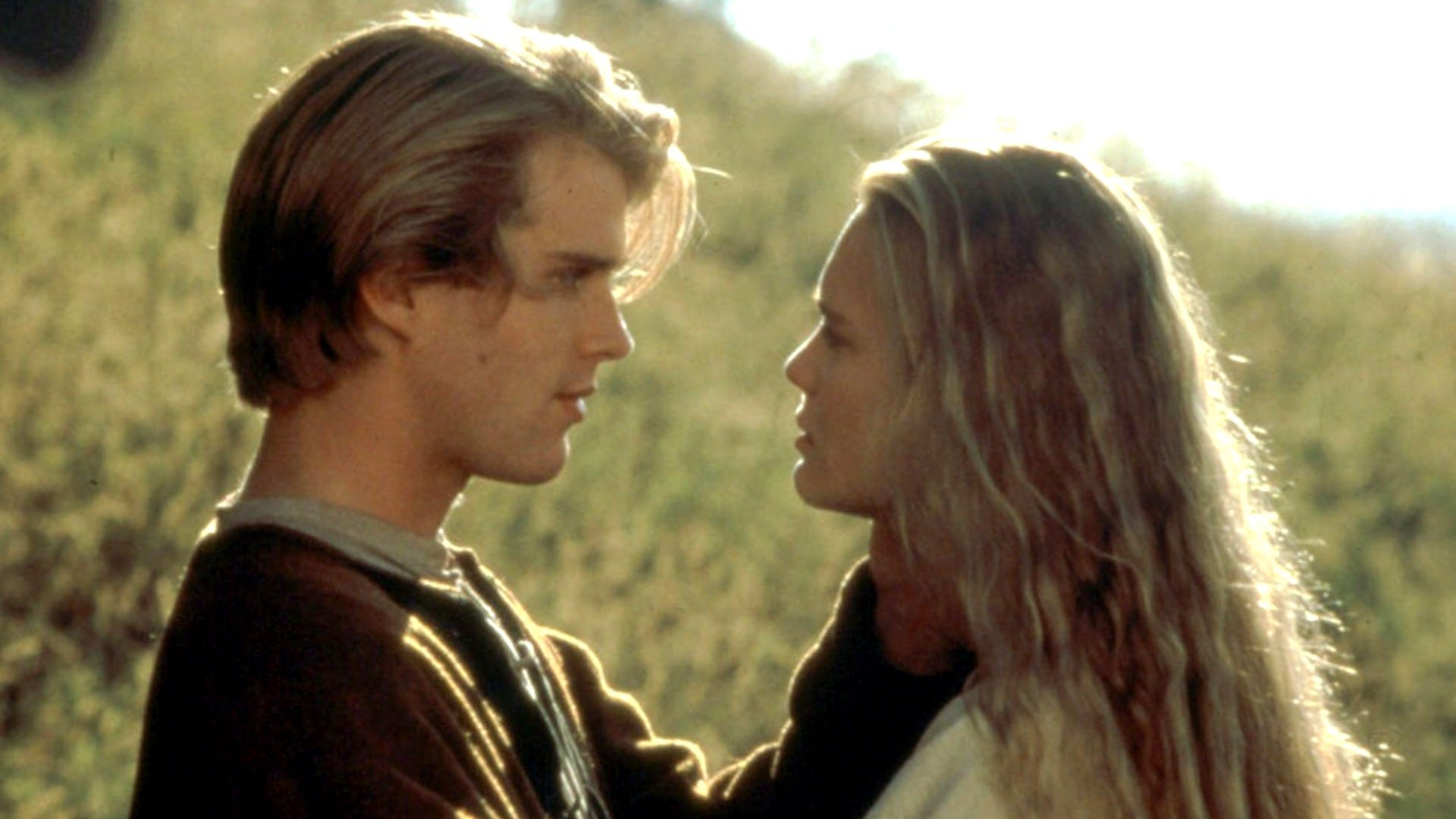
Confession-time: For many years, I didn’t understand the appeal of The Princess Bride.
It’s not a movie I had much familiarity with as a child. I saw bits and pieces of it playing in the lunchroom in elementary or middle school; I remember swordfights, Fred Savage and – because I was a WWF kid – Andre the Giant. But I don’t know if I ever watched it straight through. My parents weren’t fantasy fans, so it never made its way into our regular lineup.
In my twenties, however, I noticed that when the topic turned to movies, Rob Reiner’s 1987 comedy came up a lot. It was probably the answer I heard most whenever someone was asked to name their favorite film; those who didn’t name it often heard someone else mention it and considered changing their answer. When I mentioned that I had never seen it completely through, my friends were shocked. Sometime in the late-90s or early aughts, they staged an intervention. We gathered at a friend’s house to watch it, and they waited to hear what I thought.
And I said it was…fine.
I would venture that this happened around 1999 or so. I was a burgeoning film snob, and my head was swimming in the revelations of The Matrix, the philosophical waters of The Truman Show a year prior, or craving something edgy and “grown-up.” Like my parents, I wasn’t a huge fantasy fan, so its fairy tale references didn’t speak to me. I laughed with the film – particularly Billy Crystal – and thought it was enjoyable, but I couldn’t fathom why so many had it so high on their lists.
That was my position for well over a decade. If the film came up in conversation, I was the contrarian who said “it’s okay, but let’s not go crazy.” Like many young critics who like to think they’re above the mainstream rabble, I took a perverse pride in knocking the film down a peg. I never said I disliked it, but I was happy to let all its fans know that I thought it was nothing more than a piffle. I was legitimately baffled why people loved it so much.
Sometime early in the pandemic, we settled in for a family movie night and I suggested that The Princess Bride – which I knew my wife enjoyed much more than I did – might be a good entry-level live-action fairy tale for our son. Predictably, he loved the sword play and derring-do. But I was surprised by my reaction – I was utterly delighted by the movie. I chalked it up to it being a joyful respite in the dark days of lockdown, or the opportunity to share the movie with our kid. But then, a few years back, I watched it again and was struck once more by how strongly I responded to its adventure, warmth, humor and romance. I didn’t just enjoy the movie; it made me happy. Watching it with my daughter this past weekend, I couldn’t wait to revisit Westley, Buttercup, Inigo Montoya and Fezzik. It’s a legitimately great work of entertainment, belonging on a short list with The Wizard of Oz and Singin’ in the Rain as movies that can instantly lighten a mood for an audience ranging from 9 to 99. I can happily say I now love The Princess Bride.
Tale as old as time
I haven’t read William Goldman’s novel, but I understand that it takes a meta approach, presenting itself as the work of a scholar telling “only the good parts” of an otherwise lengthy and dull epic fantasy. Reiner’s film, which Goldman adapted for the screen, uses the story of a grandfather telling his grandson a story to accomplish the same task. It imbues the story with warmth and allows it to be self-aware of cliches and archetypes without positioning itself above or better than the material. By acknowledging the story as a kids’ fairy tale, it prepares the audience to expect, embrace and laugh at familiar tropes while still being taken in by them.
The material between the kid (Fred Savage) and his grandfather (Peter Falk) is perfect. I’m sure many audience members were, like the young boy, skeptical that a fairy tale romance could still work any magic, so the movie disarms any cynicism before it starts. And Falk is a stand-in for both Goldman and Reiner, confident that he possesses the storytelling skill to lower those raised eyebrows and work the audience. The film periodically returns to Savage and Falk to have the kid protest the treacly romance but also show that he’s slowly being invested in the story; one thing I noticed on this viewing is that my guard usually comes down at the same time as Savage’s. Just as I’m ready to roll my eyes that the love story is too simple, I become infuriated at the thought that Buttercup might actually have married Prince Humperdink (and yes, “murdered by pirates” is good).
The story within the film presents the same “only the good parts” version of a fantasy. There’s no political metaphors, no complicated mythology, no grandiose moments of self-importance. It’s the tale of farmhand Westley (Cary Elwes) and Princess Buttercup (Robin Wright), two young lovers separated when he sails off and is killed by the Dread Pirate Roberts. She agrees to marry the vain and duplicitous Prince Humperdink (Chris Sarandon), but is soon kidnapped by a Sicilian genius (or so he thinks – and he thinks a lot) named Vizzini (Wallace Shawn), who’s being helped by two hired hands, the kind giant Fezzik (Andre the Giant) and the Spaniard with his heart set on revenge, Inigo Montoya (Mandy Patinkin). They’re pursued by a masked man in black – who audiences will probably realize is Westley long before Buttercup does. These are familiar beats, pulled from a dozen different fantasies, but they’re a device on which to hang big laughs, which brings freshness to the familiarity.
‘The Princess Bride’ is deceptively simple
I’m always surprised how fast The Princess Bride moves. We’re barely a half hour in before Buttercup has been kidnapped and Westley and Inigo Montoya – the rare movie character where you must say his entire name each time – spar atop the Cliffs of Insanity. From there, he easily evades Fezzik, Vizzini outsmarts himself, and Westley and Buttercup reunite. Soon, we’re dashing through the Fire Swamp, escaping lightning sand, and battling Rodents of Unusual Size. By the time Miracle Max tells them to have fun storming the castle, I’m shocked that we’re already entering the home stretch. It’s paced better than almost any ‘80s movie not called Raiders of the Lost Ark, and yet it feels like it’s luxuriously ambling from scene to scene, both in no hurry to get anywhere and eager to unleash its next delight.
The simplicity makes it work. Because we’re aware this is a fairy tale being told to a child, we don’t need elaborate mythology or deep backstory; being told Westley and Buttercup are in love and that Inigo Montoya wants to avenge his father are enough. Because it moves so confidently and quickly, with sharp dialogue letting us know the film’s in on the joke, we celebrate rather than mock the tropes. We thrill to the swashbuckling, gasp at the ROUS’s, and know that, of course, Westley won’t really die – but we’re willing to suspend our disbelief and pray that Miracle Max is as good as his name.
The tone is so perfectly balanced that we probably don’t even realize we’re laughing with the movie, not at it. Rather than a disposable comedy or spoof, The Princess Bride delivers the laughs without sacrificing its fairy tale heart. Westley and Buttercup’s romance is “true love” only because we’re told it and they believe it; but dangit if we don’t allow ourselves to feel it in their longing gazes and declarations of passion. Yes, we know Westley won’t die – but it’s still terrifying when Humperdink’s machine sucks out his life. Sure, we’re told revenge solves nothing – but we still thrill when Count Rugen hears “My name is Inigo Montoya. You killed my father. Prepare to die,” over and over. It’s the rare movie that has its cake and eats it, too; it pokes fun at the triteness of fairy tales while allowing us to be captivated by one all over again1.
It feels absolutely effortless but, of course, the magic is that it takes hard work to make something feel like so much fun.
William Goldman had already earned his reputation as one of the great screenwriters by the time The Princess Bride hit theaters. He was, of course, the scribe behind such iconic films as Butch Cassidy and the Sundance Kid, All the President’s Men, and Marathon Man. While I haven’t read The Princess Bride novel, I have to imagine his love for telling a story with only the good parts made it easier for him to structure this for the screen. But in addition to being a perfectly paced romantic comedy fantasy, it’s also one of the most quotable movies ever; I assume on many lists it’s nearby Reiner’s own This is Spinal Tap. I won’t list the the lines here; you’ve likely been running them through your head as you’ve read this review.
But good lines only work when they’re perfectly delivered. I know that a few years ago during the pandemic, a re-read of this movie was put together online with other Hollywood superstars. And, of course, a few times a year, someone gets what they think is the novel idea to redo this film with Muppets. And while I wouldn’t turn up my nose at Muppet Princess Bride2 , this all seems to miss the point that you can’t improve on perfection.
I don’t think Cary Elwes – an actor I always enjoy watching in anything – has ever topped his work here. He has so much fun playing Westley as both a parody and perfect approximation of the Erroll Flynn swashbuckler; he doesn’t tell a lot of jokes, but it’s the coolness and confidence with which he describes how he outwitted Vizzini or the no-sweat way he maneuvers through the fire swamp that always makes me laugh, and his physical comedy can swing from over-the-top swordplay to goofy slapstick in the final act, when Westley recovers from being “mostly dead.” While Wallace Shawn is only in the film for a few minutes, he’s pure perfection in every one of them, so stupidly assured of his own brilliance that he somehow poisons himself by overthinking. I don’t know that Andre the Giant was cut out to be an actor, but he’s so lovable that I just want to hug him. There is something in Mandy Patinkin’s eyes that clearly shows how much fun he’s having while still speaking volumes about the pain that drives Inigo Montoya. Chris Sarandon and Christopher Guest don’t have to do much but be dastardly, and they’re good at it. And then Billy Crystal and Carol Kane show up for one scene and walk away with the entire story.
I’ve seen some complain that Buttercup is the film’s only weakness. On the surface, I can see their point. Buttercup doesn’t have much to do but stand around and declare her love for Westley, and she’s not much help in the fire swamp. And true, I don’t know that Goldman’s script sees her as much more than a damsel worth saving – but wasn’t that the case in all fairy tales? And it’s a moot point anyway because Robin Wright takes what she’s given and brings so much conviction. Yeah, Buttercup might only be identified by her love for Westley. But when Buttercup says she’d rather die than be without him and that she is confident he will come for her, I believe it. She’s propelled by her unwavering belief in true love and the movie’s magic trick is that we believe it, too. The cast understands the lightness of the enterprise – that this is a romp they play with delight – without sacrificing emotional grounding, which is why these characters are so beloved.
This was Reiner’s fourth feature, and by now he was establishing himself as one of Hollywood’s most reliable journeymen. I don’t know that I can look at any of his films and pick out an artistic signature, but he had a knack in these early years for understanding how to tell a story in just the right way for it to connect with audiences. He trusts his actors, a skill which had already yielded memorable work in other films. He brought in a crew able to walk the tonal tightrope, from Norman Garwood’s production design, which finds a balance between classic adventure and storybook fantasy in its mystical woods, small villages and giant castles, to Adrian Biddle’s cinematography, which knows just when to bathe the film in a fairy tale glow. I don’t know that Reiner ever made the jump to auteur; I don’t know that it matters. His ability to navigate tone and genre was what made him such a skilled storyteller.
As I’m wont to do, I just spent more than 2,000 words telling you something that I could probably sum up in one line: The Princess Bride is funny, romantic and thrilling, and one of the most rewatchable movies of all time. Whether you’re a child swept up in the love story and adventure or an adult who likes to quote “Inconceivable” and “twue love” along with the film, it works like few other films. I’ve never been so happy to be so wrong about a movie.
Previous entries in this series:
It occurs to me one of the few other movies that walks the tightrope between skewering a genre and celebrating it this well is Scream.
** Okay, obviously you’d have Kermit as Westley and Piggy as Buttercup. Gonzo would be Inigo Montoya, Sweetums would be Fezzik., and Pepe the Prawn as Vizzini. Fozzie would, of course, be Miracle Max.
I’m glad you came around. One of the best movies of the ‘80s.