

WE WERE HERE is a lesson in loving your neighbor
Documentary showcases the community response to the AIDS crisis.

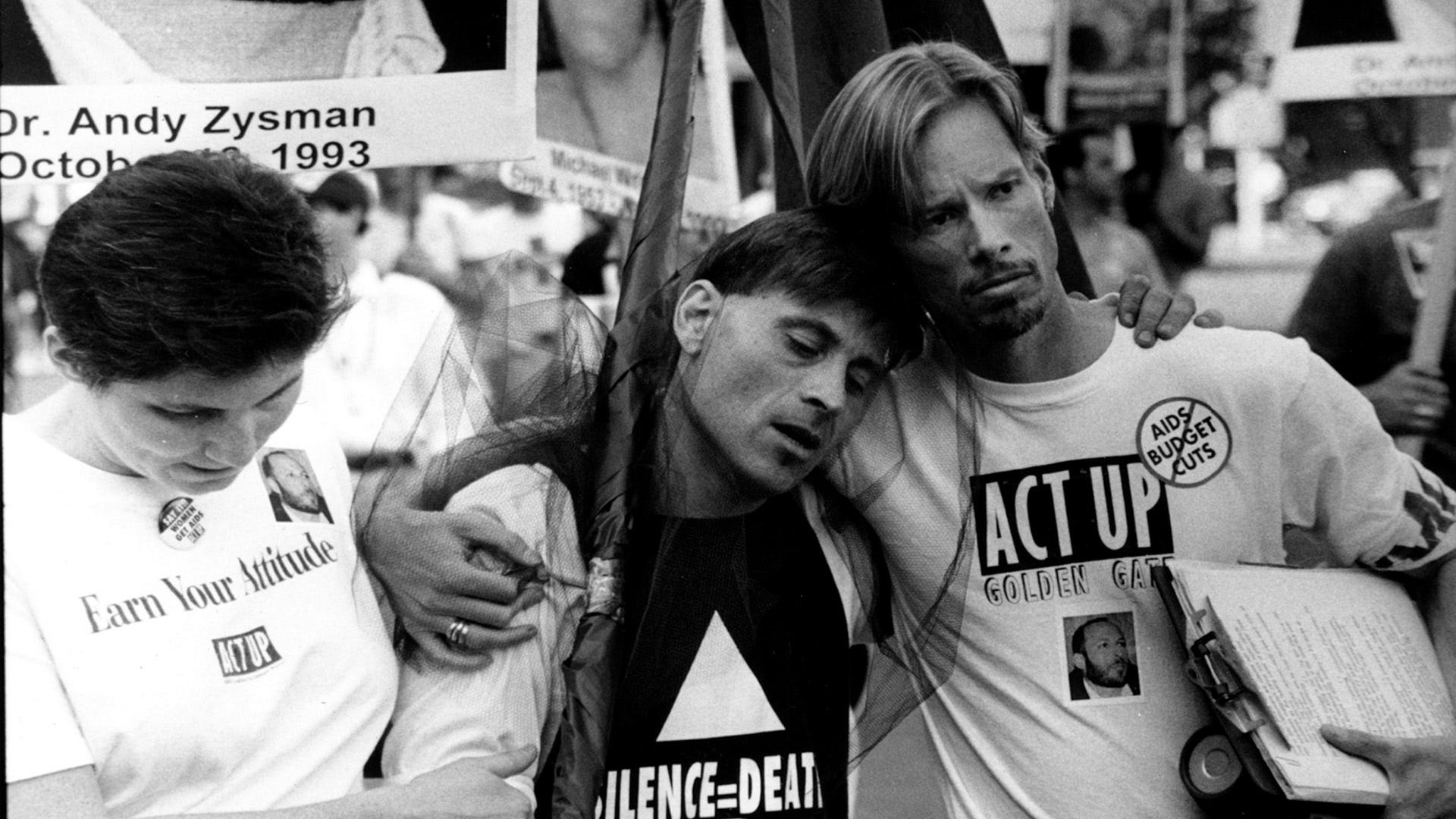
For Pride Month, I’m watching documentaries about the LGBTQ community.
I didn’t intend to watch We Were Here as a follow-up to The Times of Harvey Milk, but it feels, in retrospect, almost like a companion piece. Rob Epstein’s Oscar-winning 1984 documentary about San Francisco’s first gay elected official celebrates the coalescing of the city’s gay community, but ends on a fraught note, as Milk’s murder and the shortened sentence for Dan White proved how tenuous that progress was. And it ends with the community unaware that an even bigger challenge was on its way.
The 2012 documentary We Were Here covers many members of the same Castro Street community as they endured the AIDS epidemic in the late ‘70s and throughout the ‘80s. And where The Times of Harvey Milk celebrated progress without neglecting the tragedy, David Weissman’s film doesn’t shy away from the heartbreak and horror but also finds moments of beauty and inspiration in its portrayal of an isolated, often shunned community caring for each other in the face of terrible tragedy and stigma.
The film is almost entirely a collection of interviews with people who lived in the Castro district in the 1970s, drawn by the promise that they could be themselves and find a new community where they fit in. All had friends and partners who died of AIDS – sometimes multiple friends and partners. A few were still living with HIV at the time of the documentary. And all rolled up their sleeves and found a way to provide support, healing and advocacy when much of the world turned a blind eye.
The participants recall the openness and community they found – many of them after facing rejection from their families. Some led wild lifestyles, others found partners, still others just seemed happy to find a place where they belonged. And they describe the arrival of a strange virus, originally known as “the gay cancer,” with mounting horror. First, men in the community began getting red spots all over their body. Then, they began getting sicker. Soon, it was almost impossible to find someone who didn’t know a close friend or family member who had died of AIDS. Unlike COVID, where we quickly learned to distance, mask up and wait for a vaccine, by the time AIDS was identified, it was already prevalent in the community, and once it was contracted there was little to do. It was a death sentence – and unlike COVID, where the world immediately sought a solution, too many dragged their feet or turned a blind eye.
Having grown up in the 1980s, I remember the stigma of AIDS, especially in the years before medications rendered it treatable. For many, especially those of us who grew up in suburban families far from the city – especially if we were heterosexual and especially if we were in conservative Christian circles – AIDS was something used to condemn people. It was limited, we were told, to the gay community and to people who slept around or did drugs. Live right, we were told, or else this was what God had in store. That’s not to imply total callousness – we felt bad, we prayed, we hoped for a cure – but the general tone implied the victims reaped what they had sown.
Years later, we know the truth. Yes, HIV spread easier through gay men, but it wasn’t a disease that targeted them or drug users. It also spread through unprotected heterosexual sex, doctors who weren’t careful with their needles, accidental pin pricks when handling blood. It spread to children born to parents who had the virus. I remember there being a bit of the turning of the tide in 1991 when Magic Johnson announced he’d contracted HIV; if he could get it, the thought was, anyone could.
Of course, why someone gets a disease shouldn’t be a concern for anyone but the medical professionals treating it. It shouldn’t be a barrier to concern, empathy or care. But … it was. Reagan showed little concern. There was panic over AIDS, but it was used to stoke and exploit homophobia – including one bill discussed in the film that proposed putting gay men in quarantine. Because laws prohibited gay men and women from marrying, many men were not able to be in the hospital room when their partners were dying. And that’s not even mentioning the outright homophobia or rejection of their own families – at one point, a man who helped with one of the first AIDS clinic floors recalls a patient’s father telling him “it was harder to learn my son was a f-g than to learn that he was going to die.”
It’s horrifying and deeply heartbreaking to watch as one man describes his partner, an immunologist, startresearch on one drug only to watch as it made all the participants sicker and nearly everyone – including the immunologist – died quickly. A nurse talks about having to stand by the bedsides of her patients as the pathologists remove the eyes from their dead bodies. When a newspaper decided to honor the names of all that year’s victims, the spread of individual photos filled multiple pages. It’s overwhelming and nearly impossible to process. AIDS has been largely treatable for so long that it’s easy to forget the devastation of those early decades and the isolation forced onto those men.
And yet, that’s only part of the story. Because We Were Here also details the amazing grassroots work of the gay community to care for its own when the rest of the world turned its back. The nurse discusses working in the clinics and caring for patients but also becoming involved with ad hoc clinical research on the first therapies to treat AIDS. Another talks about how his shyness kept him from finding love in the community but how that same calm demeanor and interest in people made him perfect for supporting those with AIDS and coming alongside them as an advocate. A florist was the go-to man for funerals, often free of charge. An artist who lost two partners to AIDS and contracted the disease himself found his way out of depression by providing free art supplies to community members. Another found a career in activism and political advocacy.
It’s powerful and inspiring to see these men and women talk about the roles they played. Despite unimaginable suffering – as they continued to see their friends and neighbors die – they refused to sit back and do nothing. Sometimes support meant trying to find treatment or lead protests against politicians who weren’t doing enough. Sometimes, it just meant delivering groceries or flowers or simply being present. But through these little commitments, they were able to unite and support their community, thrive together, and contribute to a reduction in deaths and the eventual acceptance of treatment. For many outside the gay community, it changed their perspective; as one man notes, the LGBT community had previously just been identified as people who loved to have a good time, but the world saw that they were also loving, compassionate caregivers.
Religion isn’t mentioned much in the film, aside from a clip of Jerry Falwell. While I know many evangelical churches – including ones of which I was a part at the time – ignored the gay community at best and condemned them at worst, other denominations stepped in and provided care, compassion, prayers and community for those who were suffering. But as I watched We Were Here for the first time in 14 years – a time in which my own feelings and beliefs on the issue in regard to my faith have changed – I realized I was watching a model of what it looks like to love one’s neighbors.
There’s a lot that communities – including religious institutions – can learn from the San Francisco model that weathered the AIDS epidemic. Listening to the men and women talk about their commitment to caring for others, it’s striking how little of this care was calculated, pre-planned or, initially, well organized. It came from seeing a need and doing what they could. It came for people being motivated by compassion and concern to do whatever they could and learning where they were specially equipped to get involved. Sickness didn’t deter them. Loss didn’t stop them. They were there, even when the rest of the world was not.
We Were Here is available to rent on Amazon.